
News & Updates
28th May 2026
What does the new £50k EV tax limit actually mean for drivers?
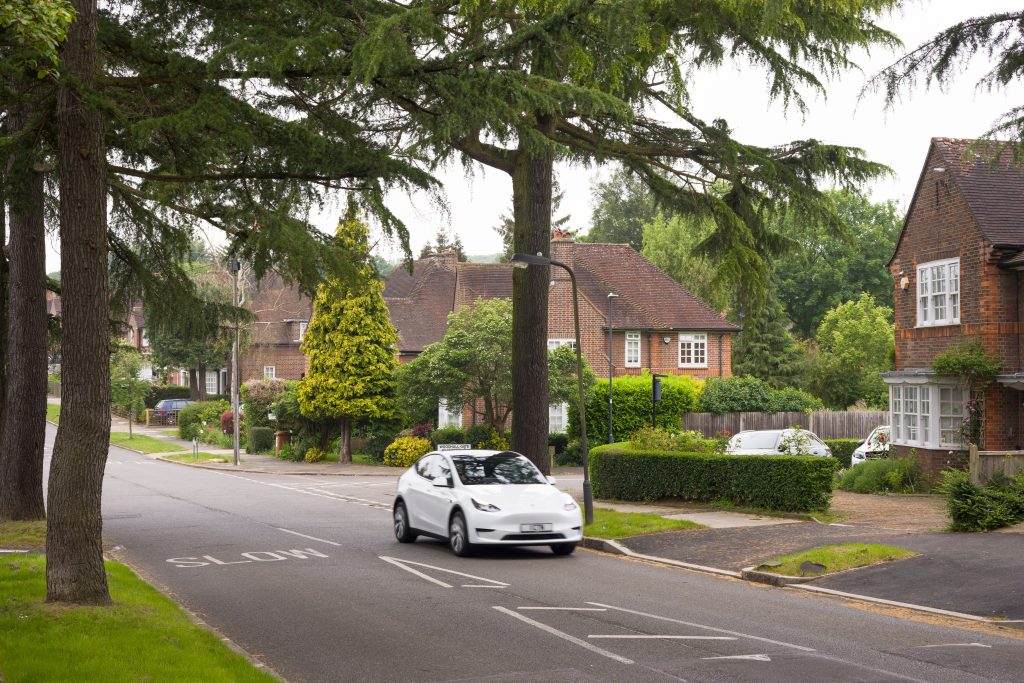
From April 2026, the UK Government increased the Expensive Car Supplement (ECS), often called the luxury car tax, for electric cars from £40,000 to £50,000.
On paper, that sounds like a simple change. In reality, it’s a pretty big moment for electric drivers, employers, salary sacrifice schemes and anyone considering making the switch.
Let’s break down what’s changed and why it matters.
First things first… why has the limit changed?
When the ECS was first introduced in 2017, it was designed with traditional “luxury” cars in mind. Back then, if an electric vehicle (EV) cost more than £40,000, it was something like a Tesla Model S, Model X or BMW i3 – definitely sitting in the premium space.
Fast forward to today, and the car market looks very different.
According to SMMT figures, SUVs now make up over half of all new car sales in the UK, and electric cars have gone firmly mainstream. In fact, EV registrations rose by 29.1% in 2025 alone, now accounting for around a quarter of the UK’s new car market.
And here’s the key bit: many of those cars aren’t your luxury models anymore, they’re just… normal.
Family SUVs. Motorway cruisers. Urban commuters. The kinds of electric cars drivers now use every day. Inflation, cost of living, a few extras, were all tipping everyday cars into the “luxury” bracket.
The good news; the new £50k threshold, coupled with manufacturers bringing out more affordable models, means that more cars aren’t eligible for the additional supplement.
So, what actually changes?
More salary sacrifice EVs now avoid the supplement.
This is where the biggest impact is for salary sacrifice.
Lots of the UK’s most popular salary sacrifice EVs naturally sit between the £40k and £50k mark, think cars like the Polestar 2, Hyundai IONIQ 5 or Kia EV9. These, coupled with more affordable models such as the Dacia Spring, Renault 5 e-tech and Kia EV3 means there’s loads to choose from before the supplement applies.
Under the old rules, drivers choosing cars which retail at £40,000 or above would’ve paid an extra £425+ a year on VED for the first five years from new… even though the car was fully electric.
Now? Many of those cars fall below the new threshold, meaning no extra charge.
The rule finally reflects the real EV market
The reality is, the EV market has evolved rapidly.
What used to be “premium” is now pretty standard, especially when it comes to family cars. As we previously pointed out, SUVs and crossover models now dominate the UK market, however they were often caught over the threshold for the supplement.
Modern EVs you’ll be discovering often come with:
- Larger batteries (for better range)
- Advanced safety technology
- Smarter connectivity
- Driver assistance features
- Faster charging
- More space for everyday life
EVs are far more advanced than they were a few years ago.
Take safety, for example. Today, most drivers expect top safety ratings as standard. And when you look at recent 5-star Euro NCAP performers, a lot of them are electric family cars – not luxury outliers.
Models like the Volvo EX30, MINI Countryman Electric, BYD Dolphin, and Leapmotor B10 show just how “normal” high-spec EVs have become.
Put simply: the old £40k limit was stuck in the past. The £50k limit brings things back to reality.
More employees can access long-range EVs

When employees are exploring their car options, range is usually one of the first things they look for – especially for those doing longer commutes, or regular motorway journeys.
Tusker’s 2025 EV Driver Survey found that 89% of EV drivers believe their car offers sufficient range for everyday use, whilst 38% regularly drive over 200 miles on a single charge.
The new £50k limit means more of these longer-range cars now avoid the supplement altogether – making electric driving even more accessible for employees.
It gives drivers more confidence to make the switch
Switching to electric is a big step, and the uncertainty around long-term costs and future tax changes doesn’t help.
In fact, 63% of drivers said the upfront cost of purchasing an EV was still a major deterrent and 66% say affordability and tax benefits are key to choosing an EV through salary sacrifice.
Drivers can feel reassured that:
- The EV market is speeding ahead
- Government policy is catching up
- Electric cars really are the new norm
And the appetite is already there:
- 74% expect to be driving an EV within four years
- 96% of EV drivers say they’re satisfied
Removing that supplement makes electric driving feel not just more affordable, but more achievable and future-proofed too.
Find out how Tusker’s salary sacrifice scheme can help make the switch to electric simple, cost-effective and easy to manage.
Enquire today.