
Electric Cars / Employee / Employer Insights
12th June 2026
Driving an EV in summer: is there any difference?
Sunny days, longer evenings, road trips, weekend plans – summer driving just feels different.
But if you’re driving an electric car for the first time, you might be wondering whether warmer weather changes anything. Does the range go up? Does air conditioning drain the battery? Can you charge safely in hot weather? And do you need to drive differently?
Electric cars are designed to effortlessly handle all kinds of weather, and warmer UK temperatures can often help electric vehicle (EV) efficiency. There are just a few things worth knowing, especially when the mercury starts to climb.
Let’s take a look.

Are electric cars better in summer?
Electric cars tend to be more efficient in mild to warm weather than they are in cold weather. That’s because batteries work best when they’re not too cold and not too hot. In summer, the battery is already closer to its ideal working temperature, so the car often has less work to do.
Warm, summer weather can significantly increase the range on your car, making those last minute trips to the beach easier than before. The warmer the weather, the more range you get.
That doesn’t mean summer gives you unlimited range. But compared with a chilly winter morning, a mild summer day can be a lovely sweet spot for electric driving.
What happens when it gets really hot?
Typical UK summer weather isn’t something EV drivers generally need to worry about. Modern electric cars have clever thermal management systems that help keep the battery at the right temperature.
On very hot days, the car may use a bit more energy than usual to cool the battery and keep the cabin comfortable. That can reduce range slightly, because the same battery that powers the wheels also powers the air-con.
But for most everyday journeys, you’ll hardly notice the difference.
The bigger impact tends to come when temperatures really start to climb, especially if you’re driving long distances, using the air conditioning a lot or using rapid chargers during the hottest part of the day.
In other words, summer isn’t something to worry about. It’s just something to plan for, especially when the forecast looks a little more “heatwave” than “light cardigan”.
Does air conditioning reduce EV range?
Yes, air conditioning uses energy. But that doesn’t mean you should sit there and suffer the spike in heat to save a few miles.
In most EVs, putting the air-con on isn’t going to suddenly wipe loads of miles off your range. It does use some energy, of course, but generally much less than heating the car on a cold winter’s day. If you’ve parked in the shade or cooled the cabin before setting off, the impact is likely to be even smaller.
A few small habits can help:
- Pre-cool the cabin while the car is plugged in
- Park in the shade where you can
- Open the doors or windows briefly before you set off to let hot air escape
- Use air recirculation once the cabin starts cooling
- Avoid setting the cabin temperature much lower than you really need
Think of it like making the car’s job easier. The less heat it has to fight, the more energy can go towards the journey.
Pre-conditioning is your summer best friend
 Pre-conditioning sounds technical, but it’s really straightforward.
It means cooling the car before you set off, ideally while it’s still plugged in. Many EVs let you do this through an app, so you can set the cabin temperature before you even step outside.
That means you settle into a cooler car straight away, the battery does less work once you’re moving, and you avoid having to blast the air conditioning for the first few minutes of your journey.
It’s one of those small EV features that feels a bit futuristic at first, then quickly becomes something you never want to be without, and part of your daily summer routine.
Cool car, less faff, better use of energy. Lovely.
Can you charge an EV in hot weather?
Yes, absolutely.
EVs are built with systems that monitor battery temperature and charging performance. If the car needs to protect the battery, it can adjust the charging speed automatically.
On very hot days, rapid charging may take a little longer if the battery is warm, especially after a lengthy drive or extended time at higher speeds. That’s not the charger “going wrong”; it’s the car looking after itself.
A few practical steps can help:
- Charge earlier in the morning or later in the evening when it’s cooler
- Use shaded chargers where available
- Avoid leaving the car sitting at 100% charge for longer than needed
- Plan charging stops on longer trips before the battery gets too low
- Use the car’s navigation system if it can prepare the battery for charging
Most of the time, charging in summer is straightforward. You may just need a touch more planning during very hot weather or busy holiday travel.
Check for nearby points on our charger map.
A few quick summer EV tips
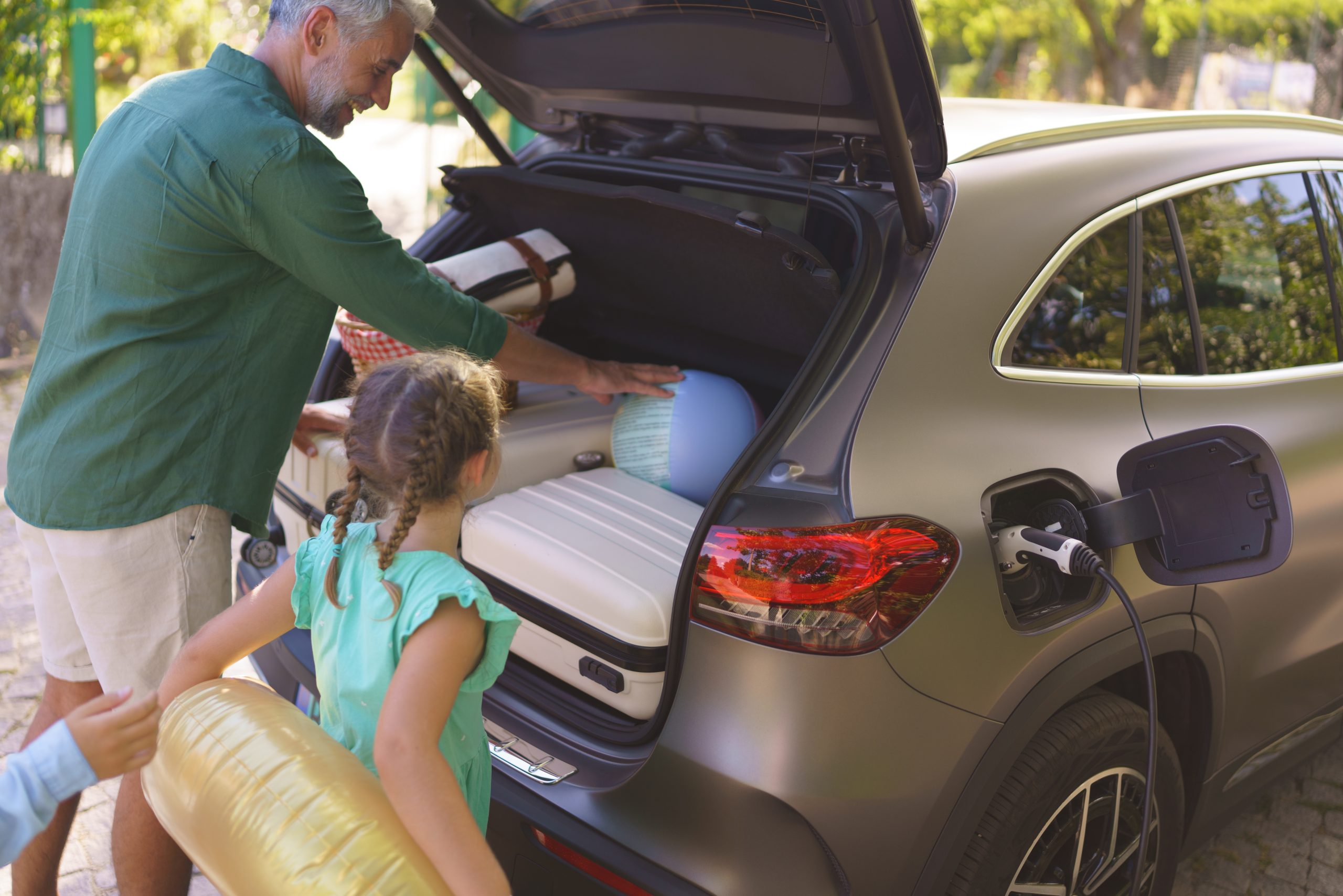 Summer EV driving doesn’t require much extra effort. A little preparation goes a long way.
Try these handy tips:
- Check tyre pressure before longer journeys
- Keep charging cables handy, not buried under luggage
- Use eco mode if you want to make the most of your range
- Remove roof boxes or bike racks when you don’t need them
- Keep the cabin cool while plugged in before setting off
- Leave a little extra range buffer on very hot days
- Plan public charging around natural stops, like lunch or coffee
None of this is about changing how you drive completely. It’s about making small, smart choices that help your EV perform at its best.
So, is there any difference?
The main thing to remember is that very hot weather can use extra energy for cooling, especially if you’re running the air conditioning hard or charging rapidly during a heatwave. But modern EVs are designed to manage this, and a few sensible habits can make a real difference.
Pre-cool the car. Plan longer trips. Charge smartly. Enjoy the journey.
That’s summer EV driving in a nutshell.
Less worry, more sunshine, and a car that’s ready for wherever the road takes you.
Looking to learn about the Tusker EV salary sacrifice scheme?
Explore our EV hub.