
Electric Cars
30th July 2026
What are AI-integrated electric cars? And how are they different from other EVs?
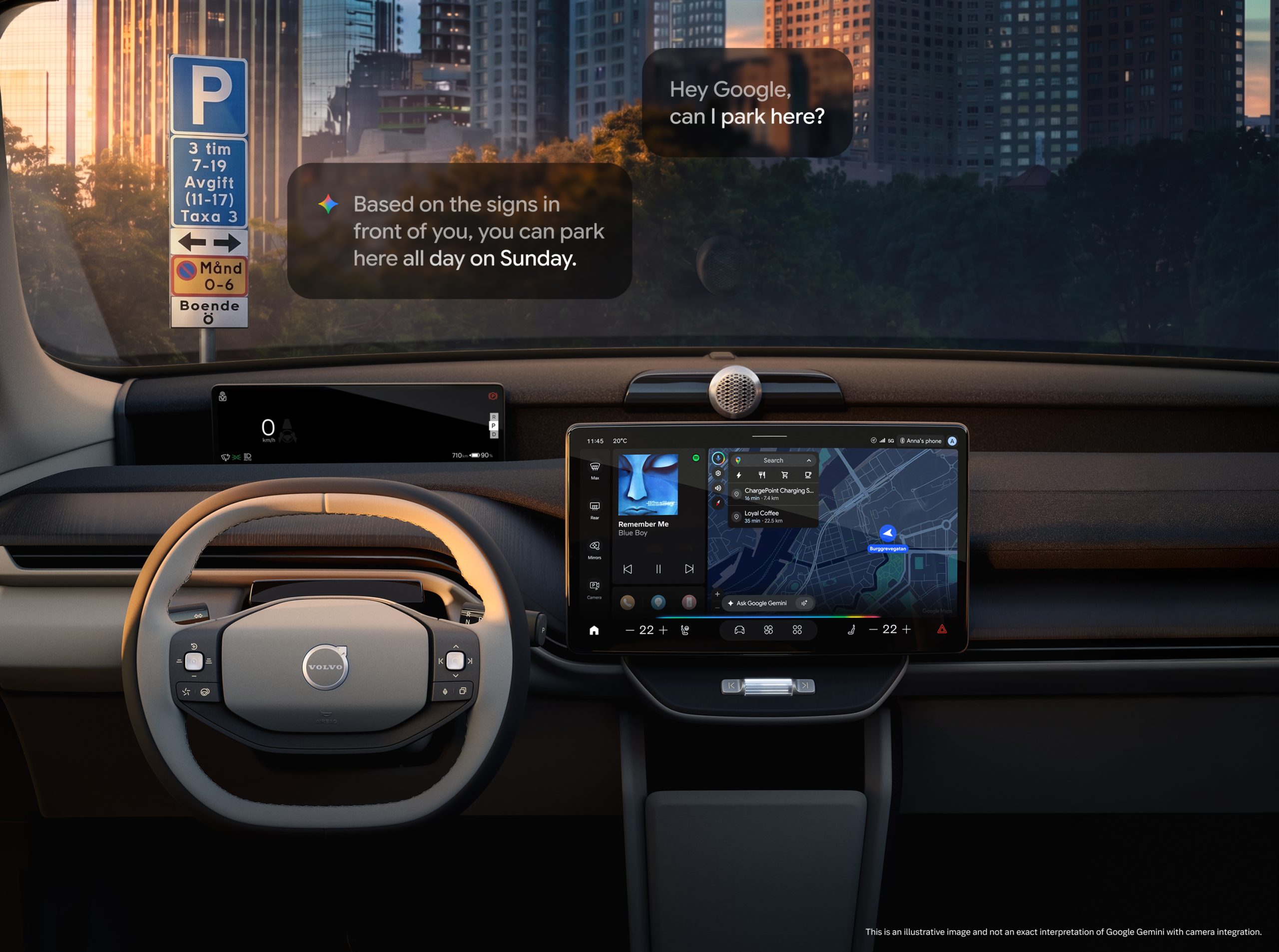
Imagine getting into your car and it already knows where you’re going, suggests the best charging stop along the way and answers questions just like ChatGPT, Co-Pilot or Claude.
That might sound futuristic, but it’s already happening.
A new generation of AI-integrated electric cars are in town and they’re changing the way we drive, making journeys smarter, more personalised and more intuitive than ever before.
So, what does that actually mean?
What is an AI-integrated electric car?
Think of today’s electric cars like smartphones. When your phone gained AI features, it simply became more intuitive, more helpful and more personalised. The same is happening with electric cars.
Most already come packed with clever technology, including apps, sat nav, voice control and software updates. AI is simply the next step, helping electric cars become even smarter by learning your preferences and adapting to the way you drive.
An AI-integrated electric car goes beyond following programmed commands. It can learn from your driving habits, adapt to your preferences and make intelligent decisions in real time.
That could mean adjusting the cabin to suit your preferences, interpreting natural conversation or adapting recommendations as conditions change.
In other words, the car doesn’t just respond – it learns and evolves with you over time.
So, What’s the difference between connected EVs and AI-integrated electric cars?
The key difference is that connected technology follows programmed instructions, while AI can learn, adapt and respond to context. Here’s how that changes the experience behind the wheel.
| A connected EV | An AI-integrated EV |
| Follows programmed commands | Learns from your behaviour |
| Voice commands follow set phrases | Understands natural conversation |
| Navigation finds the fastest route | Plans journeys using traffic, charging, weather and your driving style |
| Fixed features | Gains smarter features through AI software updates |
| Same experience every drive | Becomes more personalised over time |
That’s why manufacturers are increasingly describing their newest models as software-defined vehicles. Just like your phone gets smarter with updates, these cars can gain new features, improve existing ones and become more capable throughout their lifetime.
What can AI actually do?
The exciting part is that AI isn’t just about self-driving cars. It’s already improving everyday driving.
Some of the latest AI-integrated EVs can:
- Learn your favourite seat position, climate and music settings.
- Plan charging stops around your journey automatically.
- Optimise battery performance to help maximise efficiency.
- Predict maintenance before problems develop.
- Understand natural conversations instead of simple voice commands.
- Continuously improve through over-the-air software updates.
The result is a car that feels more personal every time you drive.
Which electric cars already use AI?
AI integration varies widely between manufacturers. Some models focus on conversational assistants and personalisation, while others use AI for journey planning, parking, energy management or driver assistance. The examples below show how different brands are bringing these features into their electric cars.
| Model | AI features | What makes it different? |
| Volvo EX90 / ES90 / EX60 | Google Gemini AI, natural conversations, car-specific knowledge, intelligent trip planning | Among the first manufacturers to deeply integrate Google’s Gemini AI. Drivers can ask complex questions rather than memorising commands, while the AI understands context and controls vehicle functions naturally. |
| XPENG G6 | AI voice assistant, XNGP intelligent driver assistance, AI parking, continuous over-the-air updates | XPENG has positioned itself as an AI-first manufacturer. Its software controls navigation, parking and assisted driving, while frequent updates continue improving the car over time. |
| Tesla Model 3 / Model Y | AI-powered Autopilot, intelligent navigation, energy optimisation, over-the-air updates | Tesla helped pioneer the software-defined vehicle. AI analyses real-time camera data to power many driver assistance features while the car continually evolves through software updates. |
| Mercedes-Benz EQE / EQS / CLA EV | MBUX Virtual Assistant, conversational AI, personalised suggestions, predictive learning | Mercedes’ latest AI learns your routines, remembers your preferences and proactively suggests destinations, contacts and vehicle settings before you even ask. |
| NIO ET5 / ET7 / EL6 | NOMI AI assistant, facial recognition, driver memory, AI-assisted driving | NOMI is designed to feel more like a digital companion than a traditional voice assistant, remembering driver preferences and responding naturally to requests. |
| BYD Dolphin Surf | Voice-controlled assistant, rotating touchscreen, connected navigation, intelligent driver assistance | A highly connected EV with a voice-controlled assistant, rotating touchscreen and intelligent driver aids. While it isn’t yet a fully AI-native vehicle like Volvo or XPENG, it shows how AI-inspired technology is becoming more accessible across mainstream electric cars. |
| BYD Seal / Sealion 7 / Han / Tang | God’s Eye intelligent driving system, AI parking, adaptive navigation, over-the-air updates | BYD’s latest models are taking a significant step towards AI integration, with increasingly advanced intelligent driving and parking systems powered by AI. |
| Lotus Eletre / Emeya | AI-assisted driving, LiDAR sensors, predictive suspension, intelligent route planning | Lotus combines high-performance engineering with AI-powered technology that continually improves through software updates, helping deliver a smarter driving experience. |
| Zeekr 001 / X / 7X | AI voice assistant, facial recognition, AI-assisted driving, smart cabin | Zeekr treats the car like a smartphone on wheels, with software and AI continuously evolving through regular updates. |
The future of electric driving
Artificial intelligence isn’t replacing the driver – it’s making driving simpler.
The biggest difference isn’t necessarily a bigger battery or a faster charging speed. It’s that your car continues to evolve after you’ve started driving it.
As AI becomes more common, choosing your next electric car won’t just be about range or performance. It’ll also be about how intelligent your car is, how well it understands you and how it continues to improve throughout the time you drive it.
Want to learn more?
From charging and battery range to the latest electric car launches, our EV hub is packed with helpful guides, expert advice and the latest EV news to help you drive with confidence.
Explore our EV hub.